
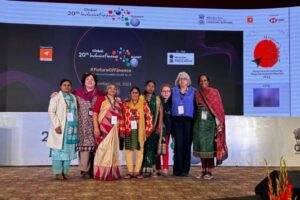
 Thought Leadership and Engagement
Advocacy
Keynote Speaker
Expert Panelist
Content Creation
We work alongside our customers to shift perceptions of enterprise and entrepreneurship, sparking new conversations, inspiring meaningful action, and creating the conditions for lasting change.
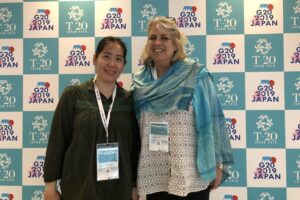 Consultancy and Strategic Support
Policy Advice
Technical Guidance
Consultancy
Strategy and Planning
We provide expert consultancy and strategic support to help policy makers and organisational leaders to navigate complex challenges, shape impactful policies, and implement effective, future-ready solutions.
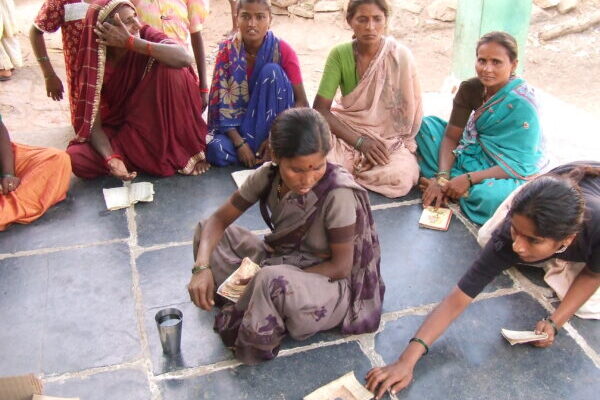 Project and Programme Delivery
Project Management
Programme Design & Testing
Project Implementation
Impact Reporting
With decades of experience in developing and delivering tailored solutions, ICE services are consistently recognised as being of both outstanding quality and exceptional value for money.
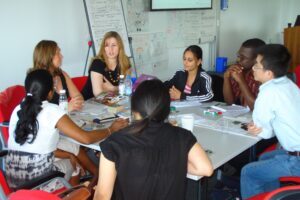 Capacity Building and Skills Development
Lecturing
Training Design and Delivery
Professional Development
Residential Programmes
At ICE, we build enterprise and entrepreneurship skills through engaging, inclusive learning experiences tailored for individuals and groups, in both formal and informal settings.
 Global Insights and Knowledge Sharing
Knowledge Exchange
Study Tours
Outreach Support
Stakeholder Engagement
We have developed well-tested methods for creating opportunities to share learning, to enable inclusive participation and cross-sector collaboration, and to co-create relevant and effective solutions.
 Information and Improved Understanding
Research and Audits
Baseline studies
Evaluation and Appraisal
Information Resources
Our customers tell us they’re able to make more informed – and ultimately more impactful – decisions thanks to the high-quality evidence, actionable insights, and tailored resources delivered by ICE.






Mitty Tohma

Dr Margo Thomas PhD

Dr Catriona Stewart OBE

Gay Haskins

Allan Gibb OBE

Jane Shaw

Steve Ellis

Sarah Miller

Ruth Winden
Alan Heptinstall
Gerry Moan, Ireland
Vimala Sundram
Karen Anderson
Madi Sharma
Through clicking on the links below we hope to provide an overview of the specialist expertise we have developed over many years. Although we pride ourselves on designing and delivering programmes that play to our strengths and that are bespoke to each customer, we draw on our knowledge to deliver insights into all aspects of enterprise and entrepreneurship.
Business Environment Reform is critical to effectively supporting and fuelling enterprise creation and growth.
Read about Business Environment Reform here.

Through providing insights into enterprise and entrepreneurship for many years we have learned that entrepreneurship is a powerful differentiator that has a part to play in every aspect of the world we live in; in government and policy, in civil society, in business and in education. Through entrepreneurial teaching and learning, as a global society we can be more creative, innovative, resourceful and, ultimately successful, collectively and as individuals.
Read our article on ‘The what, the how and the why’ of enterprise education here.
4 key aims for enterprise in education
ICE has extensive experience of the design, development and delivery of enterprise in education programmes in both primary and secondary schools and higher education institutions. Our programmes are geared to achieving one or more of the following four key aims:
Developing people’s entrepreneurial attitudes and behaviours so they can more confidently navigate the world;
Enabling people to gain the skills and qualities they need to start a business;
Embedding entrepreneurial leadership into the culture of academic institutions;
Capacity building teaching staff to be able to teach entrepreneurship and enterprise.
Enterprise in Education Programmes
We have developed a wide range of programmes to respond to a variety of needs for enterprise in education, and are also equally comfortable to tailor programmes to your niche requirements. In broad terms, our enterprise in education programmes include the following:
ICE Enterprise Illumination Programme for primary and secondary students
A unique programme that has developed a strong track record of introducing the powerful principles of entrepreneurship into the everyday thinking of young people aged between 12 and 18, and for giving them the extra confidence and skills they need to have the chance to shine. The ICE Enterprise Illumination Programme combines world-class enterprise teaching, practical enterprise-based participation and education-based international entrepreneurship tours and exchanges, which individually and collectively have a transformational effect on both students and supporting teachers. Find out more about the programme here.
Modules for undergraduates, post graduates and doctoral students
Our higher education programmes can be geared to the development of an entrepreneurial mindset as well as building the practical skills for business start up and growth management for those students who want to progress into running their own business. Several of our students have also gone on to use their enterprise skills in advisory role, including in small business policy. Get in touch to find out more
Learning and development programmes for education institutional leaders
Our entrepreneurial leadership programmes are geared to stimulating entrepreneurial thinking and behaviours within the education sector. Our practical and interactive approach enables leaders to understand and apply entrepreneurial strategy; to embed innovative thinking and creative problem solving; to set the context for entrepreneurialism within their own institution, as well as recognising how they can improve their overall competitiveness through entrepreneurship. Get in touch to find out more
Capacity building for teaching staff
Our teacher training programmes gear teaching staff to be able to deliver our tried and tested enterprise education programmes, as well as enabling them to embed enterprise across the whole curriculum. Our capacity building approach is practical and supportive, and once teaching staff have successfully completed their training, optional extended mentoring support from members of the ICE team can also be provided, complemented by our online learning portal; we have found that teaching staff have valued this additional support as it increases their confidence to deliver the programmes independently. Get in touch to find out more
Change is now a constant in the business world, increasing demands on leaders and organisations to not just survive change, but thrive and gain competitive advantage from it.
Read about Entrepreneurial Leadership here
Content Coming Soon
 Enterprise and entrepreneurship has never been as important as it is today. You may already be evaluating how entrepreneurship really fits, or how you can effectively embed the enterprise agenda so it adds value to your role, your institution or your programmes.
If you need to build capacity in entrepreneurship amongst colleagues or into learning materials and programmes, or you’re planning to commercialise elements of your service, knowledge or research, consult ICE.

(Image courtesy of Panganai Svotwa)
Through our highly regarded capacity building programmes in enterprise and entrepreneurship we can help you to fast-track the development of entrepreneurial attitudes, behaviours and actions across your organisation, building on the experience of Universities, financial institutions and government bodies worldwide.
We can also help you to understand the nuances of family-owned business, social enterprises, women’s enterprise and home-based business.
 With budgets tightening as the demand for policy-based support simultaneously increases, we’re all needing to find ways of doing more with less. Through extending the reach of economic policy across a greater representation of the business community and society, the return on investment on enterprise and business support spending can be vastly improved.
To transform your existing policies and policy-based support at a local, national or international level based on best practice around the world, consult ICE.

We can help you to identify and make the most of new opportunities to support high growth sectors which have been inherently difficult to reach through traditional economic policy, such as family-owned business, social enterprises, women’s enterprise and home-based business.
“ICE brings people together and helps us all to live up to our potential”, Sharon Porter, Consultant in Enterprise Development”
In this climate of austerity every penny counts, and money directed towards the enterprise agenda, more than ever, needs to make a tangible impact. ICE has worked with Associate Consultant Dr Pat Richardson of Richardson Howarth for over 15 years, supporting the efforts of investors and funders in establishing what impact their investments in enterprise have had. Evaluating ‘hard’, quantitative outputs through to softer, qualitative outcomes, our aim is always to provide management information and market intelligence that is valuable to stakeholders as an enabler of performance improvement, alongside monitoring retrospective performance indicators.
As well as project-based evaluations we also have extensive experience in inter-organisational audit and evaluation, with particular expertise in the field of enterprise, and regularly support organisations to develop and implement their own monitoring and evaluation frameworks.
Survival rates for family business are a genuine cause for concern. Although a thriving family business sector could form the backbone of an economy, it is generally acknowledged across the globe that family firms have a life cycle limited to three generations, and during the third phase they are expected to fail.
 Through a variety of studies and interventions, longitudinal research (Hallmarks) since the early Nineties, and more recent studies conducted in Asia and Europe, ICE understands the dynamics of the family business structure.
Our work now involves the education of a wide range of organisations leading to a deeper understanding of their business characteristics and the dynamics which often make family business owners less likely to seek support. Through an improved empathy with the family business owner, the business support sector can become better equipped to engage with the sector and provide more effective support.
Unlocking the potential of enterprise and entrepreneurship, by making it truly accessible to all, has become a central pillar of socio-economic development strategies.
Read about Inclusive Entrepreneurship here

Small and medium sized businesses make up an estimated 97% of the world’s business population.
Small businesses by their very nature reflect the personalities and characteristics of their owners much more than larger and corporate organisations. This presents real challenges, as business behaviour and decision-making can be unpredictable at best.
 If you offer financial, banking, or business support services that could help small businesses to flourish, and you’re keen to benefit from the market opportunity the small business sector represents, consult ICE.
We can help you to understand the nuances of the small business sector and, critically, to take action to effectively engage with businesses that, before now, may have been out of your reach, such as family-owned business, social enterprises, women’s enterprise and home-based business.
Rural and poor women in many war affected states have always played an important economic role in the family. Due to the impact of the war almost every family, urban and rural, educated and uneducated, depends on the economic productivity of women to a far greater extent than ever before. Whereas in the past it was shameful for a man to be financially dependent on a woman, in many households, including within the diaspora, women are now the main breadwinners.
ICE has supported agencies in Somalia and Namibia to understand these issues and to gain insight into how to better support both men and women, to stimulate and enable post-conflict economic development. We have also worked in several war affected and fragile states including Bosnia, Croatia and Libya, working with agencies to develop interventions addressing the Impact of War on Family Livelihood Systems and supporting the re-growth of once thriving international businesses. In Bosnia ICE worked as part of an EC programme across the country post war to assist SME owners to re-establish their international client base.
 Banks and providers of other financial services world-wide are increasingly aware that as the commercial environment changes in response to global pressures, their future profitability and prosperity lies with the premium small business sector.
For more than two decades ICE and Associates have worked extensively with the banking community in the UK and overseas. Our work has focused on four key areas raising awareness of the importance of the SME sector to the development of the economy, and therefore increasing the propensity of the financial services sector to turn its attention to it; deepening understanding of entrepreneurship and the process of development within the independent business to aid recognition of the need for finance, as well as recognising the support required to ensure it adds to the sustainability of an enterprise; enhancing the competence and ability of bankers to work effectively with small businesses; and providing insights into the way banks can differentiate themselves from competitors in an important and increasingly crowded marketplace.
Social Enterprise has an important role in stimulating the driving economic growth, and in Europe it is estimated that one in four businesses now starting up will be social businesses. In the UK we have witnessed this sector becoming increasingly important not only because it employs significant numbers of people, but also because it delivers vital services – often those that other providers find it difficult to do. The sector is an important source of innovation and creativity and emerging from a recession the public demand a more sustainable ways of doing business.
ICE representatives and Associates have a significant combined experience in the field of social enterprise. We recognise the enormous potential that social enterprise has in context of tomorrow’s economy, and because we really understand the dynamics of the social enterprise sector we are able to provide valuable insights to support organisations, institutions and policy makers to ensure that the most is made of the sector’s potential.

Preparing for business start up is a crucial stage for the nascent entrepreneur. Over many years we have identified 6 stages which, if systematically followed, will prepare budding entrepreneurs to progress to starting up a company successfully. The 6 stages can take a varying amount of time, depending on the individual’s personal resources and capacity, and start-up animation programmes should be structured to helping budding entrepreneurs to deal methodically with every aspect of this 6 stage process, taking into account their own personal circumstances. Support is also essential at start-up for at least the first 6 months to ensure the business and its founder develop a solid platform for future growth.
ICE provides enterprise insights into the start-up animation process. Support providers are offered toolkits and activities to explore the potential in participants to be enterprising and to raise awareness of self employment as a viable career option. We are then able to support with capacity building in programme development and delivery, ensuring that every aspect of our ‘6 stage start-up’ plan is effectively addressed through enterprise animation programmes.
 The job market is tough at the moment. The global economic slowdown coupled with widespread redundancies are making it difficult to find work.
For over-55s several other factors are also at play which is leading to this growing segment becoming the most active in starting up on their own. Earlier retirement or enforced redundancy, low interest rates, the demise of final-salary pensions, demographic changes and longevity coupled with the motivation to ‘do something’, preferably something that supplements your state pension, has led to approximately 1 in 5 opting for self-employment globally, a considerably higher proportion than the average across all age groups.
Years of experience and expertise means that more mature entrepreneurs are more likely to succeed, with over 70% lasting more than 5 years, compared with 28% of younger entrepreneurs; they could potentially add billions to any economy in the coming years if current predictions are correct. ICE has developed animation and start up programmes specifically targeted at the 55+ market and has supported a range of intermediaries to develop appropriate interventions and communications for this sector.
In recent years there has been much commentary on the ever-growing importance of women in the global market. Moreover there has been increasing appreciation that the growth of women’s economic activities and their general level of activity in the paid economy can significantly influence the success or failure of each country’s long-term economic health, to the extent that it is now often claimed that women are the producers, suppliers and customers of the future.

For more than twenty years ICE has worked with Government and a range of organisations in the public, private and academic sectors enabling them to recognise the value of supporting women’s enterprise from both a policy and practical perspective. The result has been increased awareness of the contribution these businesses make to any economy, and a small, but significant, growth in both the number of start-ups and growing businesses where women are playing an executive role.
ICE has successfully supported the design and development of networks to support women’s business ownership; advised on policy measures; written policy documents; enabled support institutions to redesign their existing programmes to ensure better take by women clients. Through the work of ICE and its associates we have seen an increase in the number of female-focused business networks, and resources designed to connect women with the support and encouragement they value and hence seen an increase in the numbers of women owned businesses.
Dinah Bennett, Founder of ICE, was one of the first women to be honoured with the Queen’s Award for Achievement in Enterprise Promotion in 2005, and was awarded an OBE for Services to Women’s Entrepreneurship.
CLICK HERE to view video of Dinah Bennett talking about her work with the British Council on the 3 year Women at Work Project in Near East and North Africa regions.
In many societies, due to drastically changing economic situations, there are huge challenges being faced by Government as to how they deal with disenfranchised young people. A number of factors have caused this and a worrying response in some countries is that these young people are being either radicalised or turning to crime.

ICE has developed a series of adaptable capacity building programmes for support providers which are geared to supporting young people into self-employment and into creating social enterprises. Programmes are designed to nurture enterprise competencies in young people, resulting in an improved knowledge and understanding of how they can create their own futures.
Significant outcomes include improved confidence and self-esteem, economic independence, and a transformation from being disengaged or excluded to becoming empowered to make a difference within their local environments – and further.